

Graffiti tattoo: from walls to skin
From New York graffiti to modern tattooing, discover how this culture moved from walls to skin.
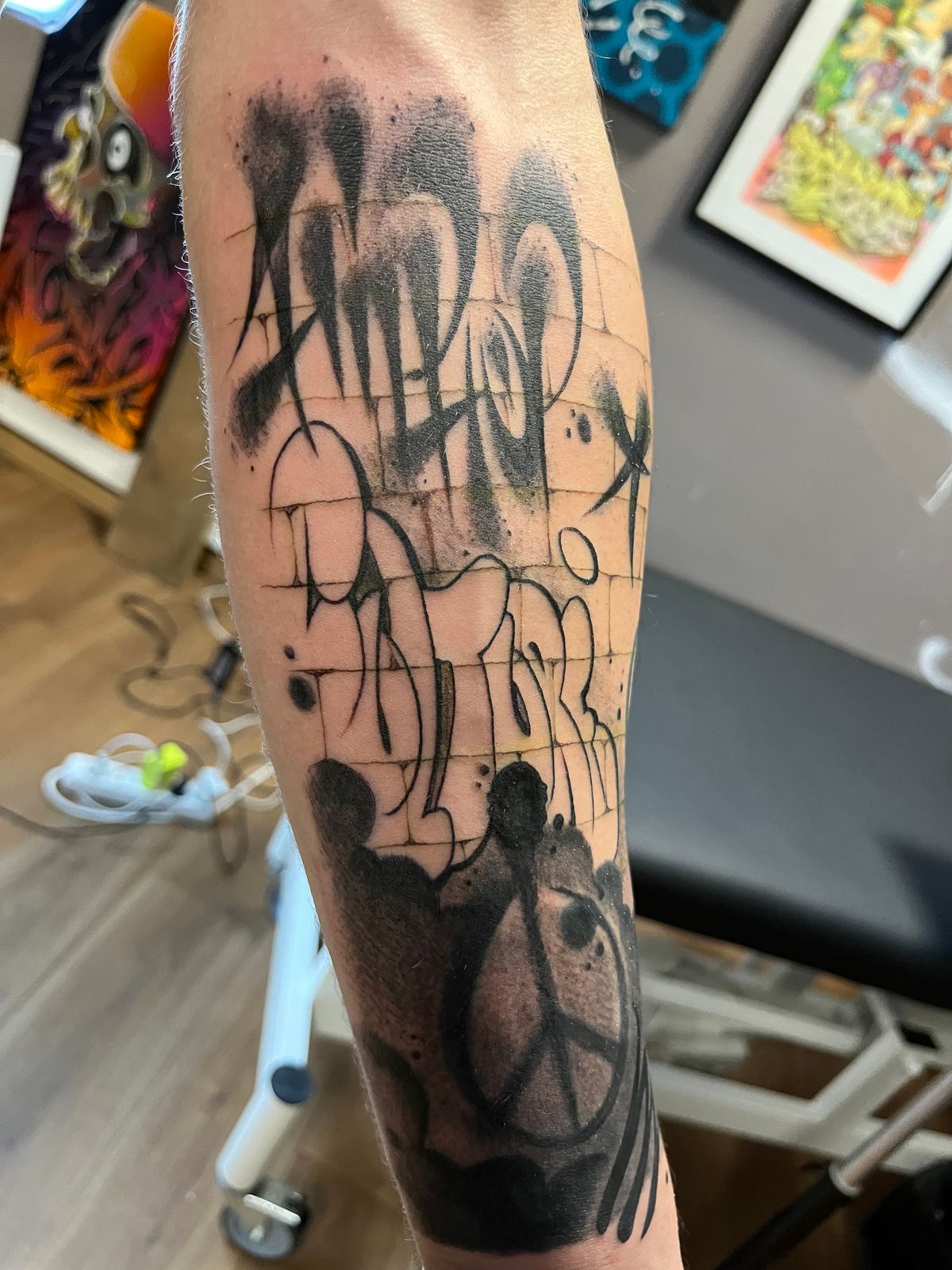
Graffiti tattoo: from walls to skin
Graffiti and tattooing naturally connect when you look at the background of certain artists.
At its core, graffiti started as writing your name in the city. New York, late 60s, early 70s. Simple tags at first, then evolving into complex letters and strong visual identities.
Over time, some artists moved beyond walls. They drew, painted, and explored other formats. Tattooing became one of those.
Moving from spray can to machine changes everything. Skin reacts, moves, and ages. The approach has to adapt.
But the foundation stays the same: line, lettering, and composition.
New York: early bridges
In the late 80s, some New York graffiti artists began tattooing.
Richard Mirando, known as SEEN, is one of the figures associated with that transition. He opened his shop and carried graffiti influence into tattooing.
Places like Tuff City Styles became meeting points between graffiti, hip-hop, and tattoo culture.
Artists like CES moved from walls to skin in those environments while keeping their identity.
Beyond New York
At the same time, Los Angeles played a key role in spreading the style.
Artists like Mister Cartoon brought graffiti-influenced lettering and hip-hop culture into mainstream tattoo visibility.
From there, the style expanded worldwide.
Europe and France
In Europe, the movement evolved in its own way.
Artists adapted rather than copied.
In France, hip-hop culture has been strong since the 80s. Graffiti has long been part of that landscape, and some artists naturally transitioned into tattooing.
Fuzi is often cited as an example, bringing a raw and direct approach rooted in graffiti.
Caen and Calvanostra
In Caen, this culture has been present for years.
The AERO association, founded by Sane2, has helped support the local graffiti scene.
At the shop, several artists come directly from that background.
Sane2, Venus, Kid Baz, and Boris all have real experience with graffiti. It shows in their approach to line, movement, and composition.
Tattooing becomes another surface to work on.
What to remember
Graffiti tattoo did not start in a single place or moment.
It developed over time, through artists who moved their practice onto skin.
Today, it continues to evolve through people who are genuinely part of that culture.
If you have a project in this style, the best thing to do is talk directly with an artist.